
Estate Cleanout Guide for Gainesville Homes
A practical guide to whole-home estate cleanouts in the Gainesville area - sizing, what typically comes out of an older home, and how to think through donation versus disposal.
ReadGuide guide
A practical checklist for sizing a tear-off dumpster before a Gainesville roof replacement, including shingle weight, storm-season timing, and driveway access.

Shingles don't behave like the rest of a typical renovation load. A stack of torn-off asphalt shingles looks small compared to a pile of drywall or furniture, but it's dense and heavy, and roofing debris is one of the fastest ways to hit a container's tonnage limit while the container still looks half-empty. Anyone pricing out a roof replacement in Gainesville - whether it's a full tear-off on an older Duckpond-area home or a routine reroof out toward Haile Plantation - should size the dumpster around weight first and volume second. This checklist walks through sizing, timing, and placement so the container matches the job instead of guessing.
Start with square footage and layer count, not just square footage alone. A single-layer tear-off on a roof under about 2,000 square feet usually fits a 10 yard container. Once you're dealing with 2,000 to 3,000 square feet, or a roof with two layers of shingles stacked from a prior reroof-over-reroof job, plan on a 20 yard. Larger homes, steep-pitch roofs that shed more waste tab and ridge material, or any tear-off with two full layers coming off at once should default to a 20 or 30 yard rather than risk a mid-job swap.
This is the step roofers skip and homeowners never think to ask about. Asphalt shingles run heavy - a single 10x10 section of tear-off debris can weigh several hundred pounds once you count the shingles, underlayment, and any rotten decking coming off with it. A 10 yard container's 1-2 ton rating and a 20 yard's 3-4 ton rating exist specifically because roofing crews fill the visual space in a container long before they fill the weight allowance, or the reverse - a container that looks like it has room left is actually already near its tonnage limit. If your roof is large, has multiple layers, or includes plywood decking replacement, size up a tier from what the square footage alone would suggest.
Gainesville sits well inland in North Central Florida, and the real seasonal pattern here isn't hurricane landfall - it's Florida's June-through-November storm season bringing high wind, heavy rain bands, and downed-limb damage that can compromise a roof well before a full tear-off was on the calendar. Wind-driven limb strikes are a common cause of unplanned reroofs in this area, and they tend to cluster during storm season rather than spreading evenly across the year. If a storm has already damaged a roof, booking a dumpster promptly matters more than usual, since tarped roofs and exposed decking don't hold up well if debris removal and reroofing get delayed. For planned, non-emergency reroofs, scheduling outside the busiest storm-season weeks can mean more flexibility on delivery timing.
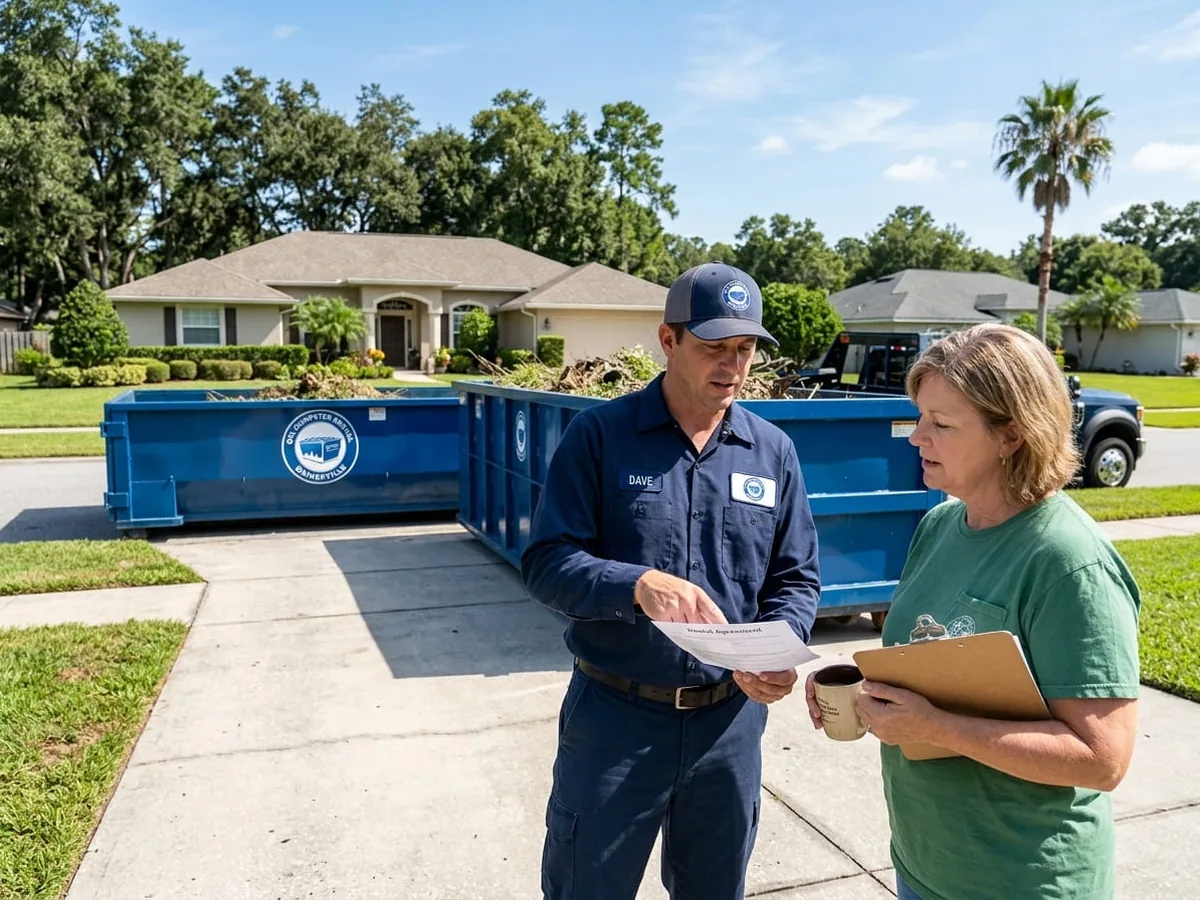
Roofing tear-offs mean constant foot traffic near the container - crews carrying tear-off material down a ladder or off a roof and straight into the box, often all day long. That makes placement matter more for a reroof than it does for a slower renovation project. On in-town lots with mature oak canopy, including streets along canopy corridors like NW 8th Ave, low branches and narrow driveways can limit exactly where a roll-off can sit, so it's worth walking the property and checking overhead clearance before delivery day rather than after the truck shows up. On newer west-side or subdivision lots the driveway is usually wider and more forgiving, but placement still needs to keep the container close enough to the work zone that crews aren't hauling tear-off debris an extra fifty feet across the yard.
A loaded roofing dumpster is also one of the heaviest things that will ever sit on a residential driveway, and the combination of concentrated weight and constant foot traffic during tear-off makes driveway protection worth planning for, especially on older concrete or any paver surface. Plywood or protective boards under the container's contact points reduce the risk of cracking or staining, and it's a quick conversation to have before drop-off rather than an issue to discover after pickup.
If a reroof is happening alongside other renovation work - gutter replacement, exterior paint prep, a little bit of interior demo - keep the roofing debris as its own load where possible. Mixing shingles in with lighter renovation debris burns through weight capacity fast and can turn what should have been a straightforward 20 yard pull into an overage charge. A dedicated roofing container, sized correctly from the start, is almost always the cheaper and simpler route.
Roofing tear-offs sometimes turn up more than shingles too - old flashing, rotten decking, and occasionally leftover roofing cement or sealant containers. Most of this can go in with the tear-off debris, but anything that qualifies as hazardous material (old solvent-based sealants, certain adhesives) generally can't go in a standard roll-off and needs to be set aside separately. Flagging this ahead of time, especially on an older home where roofing materials from a prior job might not match current standards, avoids a surprise on pickup day.
Most roof replacements move fast once tear-off starts - a crew can strip an average single-family roof in a single day, which means the dumpster needs to already be in place and correctly positioned before work begins, not scheduled to arrive mid-morning once the crew is already up on the roof. It's worth confirming delivery timing with enough buffer that the container is sitting in its final spot the evening before or first thing that morning, especially for jobs squeezed between other work on a roofer's schedule. Pickup timing matters too: a full container sitting on a driveway for several extra days waiting for scheduled pickup isn't just an inconvenience, it can be in the way if other exterior work - gutters, fascia, paint touch-up - is following right behind the reroof.
Quick sizing reference:
Talk to a real person
Call (352) 900-1538 and describe the job. Flat price, stated tonnage allowance, and a delivery window on the same call.
Mon–Sat 7:00am – 7:00pm
From this guide
A single-layer tear-off on a roof under about 2,000 square feet usually fits a 10 yard container. Roofs between 2,000 and 3,000 square feet, or any roof with two layers of shingles coming off, typically need a 20 yard. Larger or steep-pitch roofs with full decking replacement often call for a 20-30 yard.
Asphalt shingles are dense and heavy for their volume, so roofing debris tends to hit a container's tonnage limit well before it fills the visible space. A container that still looks half-empty can already be close to its weight allowance, which is why we size roofing pulls around weight first, not just square footage.
Gainesville is genuinely inland North Central Florida, well removed from coastal landfall and storm surge. The real seasonal pattern here is Florida's June-through-November storm season bringing high wind and downed-limb damage, which is a common and honest cause of unplanned roof repairs in this area.
Usually, but overhead clearance matters more on older in-town lots along canopy-covered streets than on newer subdivision lots. We recommend checking branch height and driveway width before delivery day so placement can be planned around the tree canopy rather than adjusted on the spot.
Yes, where possible. Shingles are heavy enough that mixing them with lighter renovation debris like drywall or flooring scrap can push a container past its weight limit fast. A dedicated container sized for the roofing job alone is usually the more cost-effective approach.
Keep reading
A practical guide to whole-home estate cleanouts in the Gainesville area - sizing, what typically comes out of an older home, and how to think through donation versus disposal.
ReadThe full Gainesville sizing guide: how volume and weight limits work together, and a size-by-size breakdown of the 10 through 40 yard containers with real project examples.
ReadHow a roll-off actually gets set on your driveway without cracking concrete or rutting a shell drive — plus the clearance and access details that matter around Gainesville.
Read